
How to Get Rid of Mold and Mildew on Your Home’s Exterior in Texas
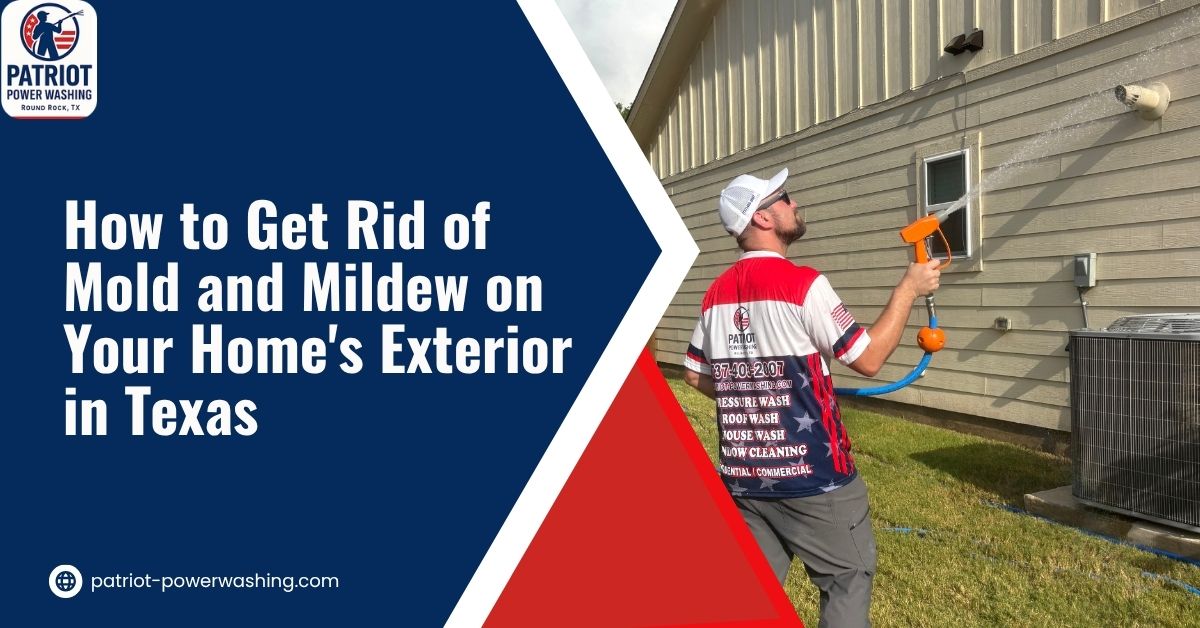
If you’ve noticed dark streaks or a chalky film creeping across your siding, you’re not alone. Between our humid stretches, sudden downpours, and long warm seasons, Texas exteriors give mold and mildew plenty of reasons to settle in. Left alone, it spreads and dulls your curb appeal. The good news is that most cases are manageable once you know what you’re looking at. Let’s start with telling the two apart.
What's the Difference Between Mold and Mildew?
People use these words interchangeably, but they aren’t the same, and the difference affects how you treat them.
Mildew is a surface fungus. It usually shows up as a flat, powdery patch in white, gray, or light green, and tends to wipe away with cleaning. Mold is the more stubborn one, often darker (black or deep green), sometimes slightly raised or fuzzy, and it can work its way into porous materials like wood.
Here’s the practical takeaway:
- Mildew sits on the surface and usually responds to careful cleaning.
- Mold can go deeper, and when it keeps returning after cleaning, it may point to a moisture problem worth having a professional look at.
Why Does Mold and Mildew Grow So Easily in Texas?
Three things feed this growth: moisture, warmth, and something organic to grow on. Texas summers supply the warmth, our humidity and storms bring the moisture, and the dust and pollen on siding do the rest.
You’ll usually spot it first in the shadier, damper corners of your home:
- North-facing walls that don’t get much direct sun
- Spots tucked behind dense shrubs or trees with poor airflow
- Areas near clogged gutters or downspouts where water lingers
- Shaded sections that stay wet long after the rain stops
If one side of your house always looks dingier than the rest, this is usually why.
If you’re planning a seasonal exterior cleaning, learn more about why summer can be an effective time for house washing in Texas.
How Can You Safely Remove Mold and Mildew Yourself?
For a light patch of mildew on sturdy siding, a careful DIY approach can work. Here’s how to go about it:
- Protect your plants first. Wet down nearby landscaping and cover it, since cleaning solutions can harm greenery.
- Mix a gentle solution. White vinegar and water is a mild starting point. If you use bleach instead, dilute it and never mix bleach with ammonia-based products. Whatever you choose, test it on a small hidden area first to make sure it won’t discolor the surface.
- Apply and wait. Let it sit a few minutes to break down the growth.
- Scrub gently. Use a soft or medium nylon brush, working in sections.
- Rinse top to bottom. Point the hose straight at the wall at roughly 90 degrees, not upward where it can push water behind the siding.
- Let it dry fully. Leftover moisture invites the growth right back.
A quick word of caution: skip the high-pressure setting on delicate siding. Too much force can gouge wood, loosen trim, or drive water into seams.
When Should You Call Exterior House Cleaning Services?
DIY has its limits. It’s worth calling the pros when:
- The growth is widespread or keeps returning after you clean it
- You’d be working on ladders or second-story walls
- Your siding is delicate and you’re unsure about the right pressure
- The staining looks dark and raised, which can hint at a deeper issue
That’s when it’s worth calling in professional soft wash pressure washing services. Soft washing uses low pressure paired with cleaning solutions designed to treat mold and mildew at the surface, gentler on your exterior than blasting it with force. A good crew also knows which surfaces can take the heavier-duty pressure washing TX for concrete and masonry, and which need a gentler approach.
If you’re unsure whether your home needs soft washing or pressure washing, this guide to soft wash vs. pressure wash explains how the two methods differ and which surfaces each is best suited for.
How Can You Prevent Mold and Mildew from Coming Back?
You can’t change the Texas weather, but you can make your home less inviting to regrowth:
- Trim back shrubs and branches so air can circulate against your siding
- Keep gutters and downspouts clear so water flows away from the walls
- Rinse your exterior periodically, especially on shaded sides
- Fix drainage spots where water tends to pool near the foundation
None of this guarantees you’ll never see another spot, but it slows regrowth and keeps cleanups smaller.
Frequently Asked Questions
Is the black stuff on my siding mold or just dirt?
It can be tricky to tell. Dirt usually rinses off easily, while mold tends to cling and shows up as dark streaks in shaded areas. If it keeps returning after rinsing, it’s likely mold or mildew.
Can I just use a pressure washer on everything?
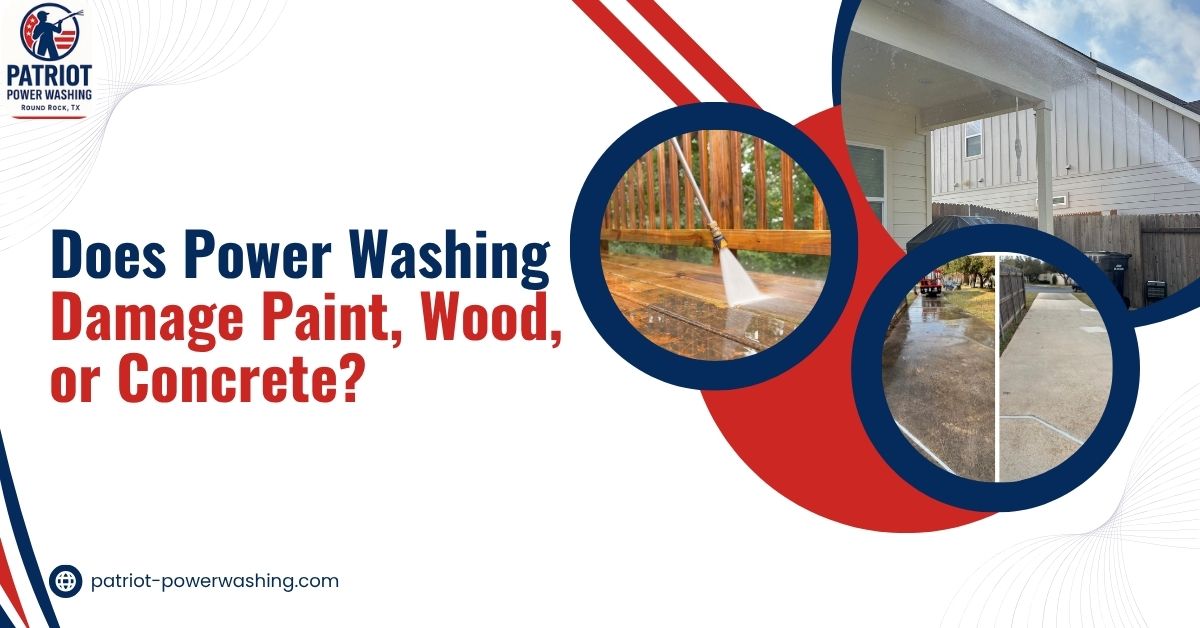
Not safely. Hard surfaces like concrete handle higher pressure, but siding, wood, and painted areas can be damaged by it. Matching the method to the surface matters.
Does mildew damage my home?
Surface mildew is mostly a cosmetic issue. Mold that penetrates wood or keeps returning can signal a moisture problem worth addressing sooner rather than later.
How often should I clean my home's exterior in Texas?
A yearly wash suits most homes, though shaded or north-facing walls that collect growth may need attention more often. Knowing when to power wash your house can also help you stay ahead of mold, mildew, pollen, and other exterior buildup.
Dealing with stubborn growth or just want it handled the right way? Patriot Power Washing is a veteran-owned team serving Austin, Round Rock, Cedar Park, Georgetown, and the surrounding Central Texas area. We’ll assess your exterior and use the safest method for each surface.
Our Latest posts
Get In Touch
Contact Info
- 737-403-2007
- patriotpowerwashctx@gmail.com
- 3817 Bent Brook Drive, Round Rock TX 78664