
Why You Should Power Wash Before Painting Your Home’s Exterior This Summer
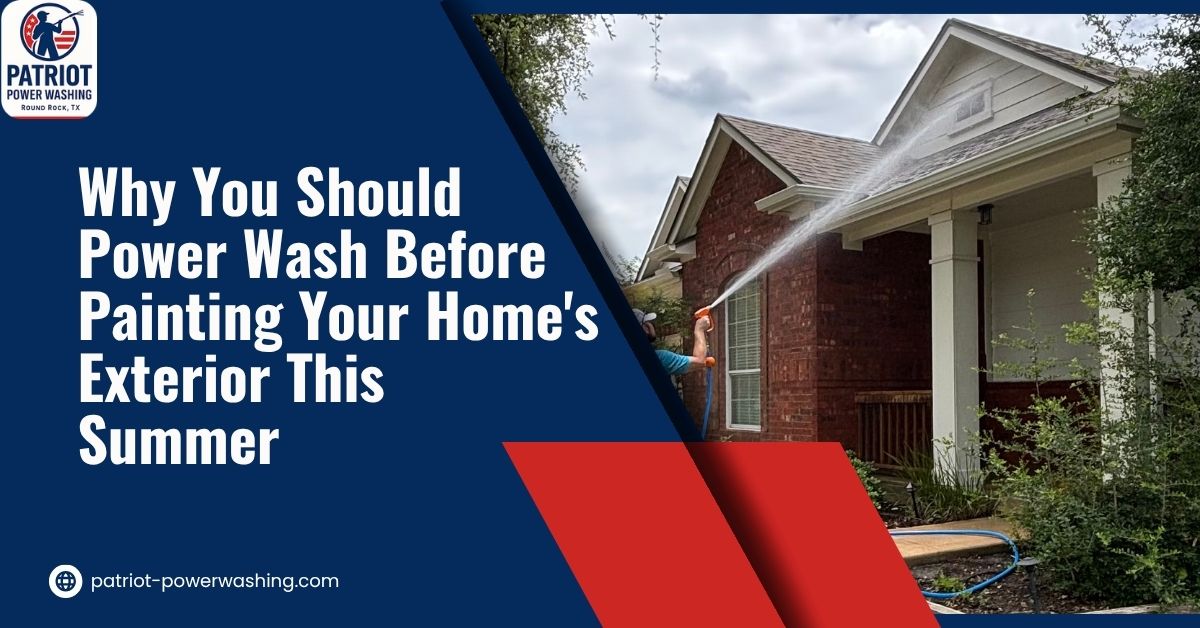
Summer is the repaint season across Central Texas, and homeowners in Austin, Round Rock, and Georgetown are lining up painters right now to take advantage of the long, dry days. But there is one step people love to rush past, and it is the one that quietly decides whether your new coat lasts three years or ten.
Before any paint touches your siding, the surface has to be genuinely clean, and that is exactly what exterior house power washing is built to do. Here is why that matters more than almost anything else you will do, starting with what a clean surface actually does for your paint.
Why Does a Clean Surface Matter So Much Before Painting?
A fresh coat of paint is only as good as what sits underneath it. Skip the wash and you are not painting your house so much as painting the layer of grime clinging to it, and that layer does not stay put.
What Actually Happens When You Paint Over a Dirty Wall?
Paint needs a clean, stable surface to grip. When you roll a fresh coat over dust, pollen, chalky residue, or mildew, the paint bonds to that gunk instead of your actual siding. The result shows up faster than you would think: peeling, blistering, uneven texture, and streaks where the grime balled up under the finish.
Here in Texas, our exteriors take a beating. Between the pollen, the red clay dust, the summer storms, and the algae that creeps into shady spots on north-facing walls, a home can look “clean enough” and still be coated in a fine film that wrecks paint adhesion. Even a house that looks spotless usually is not.
A thorough clean removes the things that quietly sabotage paint:
- Dirt, dust, and pollen that keep paint from sticking
- Mold, mildew, and algae that continue growing under the new coat and cause it to peel
- Chalking, the powdery residue that forms as old paint breaks down in the sun
- Loose and flaking paint that would otherwise leave a bumpy finish
How Much Longer Will My Paint Actually Last?
This is where washing earns its keep. Exterior paint on a dirty surface often starts failing within three to four years. Paint applied to a properly cleaned surface can hold up for seven to ten years, sometimes longer. In other words, that one preparation step can help your paint last considerably longer, often close to twice as long under the right conditions.
Exterior painting is expensive and time-consuming. Whether you are hiring painters or doing it yourself over a few sweaty weekends, you want it done once and done right. Spending a little upfront on a proper wash protects everything you are about to spend on paint and labor. Skipping it is one of the most expensive shortcuts a homeowner can take.
Pressure Washing or Soft Washing: Which One Does Your Home Need?
Not every surface should be blasted with high pressure, and this is where a lot of DIY paint prep goes sideways. The right method depends entirely on what your exterior is made of.
Soft washing uses low pressure paired with cleaning solutions that kill mold and mildew at the root. It is the safest choice for most siding, including vinyl, stucco, painted wood, and fiber cement, while high-pressure washing is better suited to durable surfaces like brick, stone, and concrete.
If you’re unsure which cleaning method is right for your home, read our guide on Soft Wash vs. Pressure Wash: What’s the Difference? before planning your exterior painting project. Using the wrong one can punch water behind your siding, strip caulking, gouge soft wood, or force moisture into wall cavities where it causes rot you will not see until it is too late.
That is the real risk with renting a machine for the weekend. A pressure washer is strong enough to carve a line into siding or crack a window seal in a single careless pass. Knowing the correct pressure, nozzle, spray angle, and distance for each surface is exactly what separates a clean prep job from an expensive repair. It is a big reason so many homeowners lean on local pressure washing services rather than gamble with a rented wand.
What About Trim, Fences, and Everything Else?
If you are refreshing the whole exterior this summer, the wash is a chance to hit more than just the main walls. Fences, railings, and surface pressure washing services for concrete walkways, patios, and driveways all benefit from the same visit. And if your property has picked up any tagging or vandalism, professional graffiti removal services can clear it before it ends up sealed under a fresh coat of paint, where it becomes far harder to deal with.
How Long Should You Wait Between Washing and Painting?
This part matters just as much as the wash itself, especially in a Texas summer.
After washing, your siding needs to dry completely before any paint goes on. Most surfaces are ready in about 24 to 48 hours, though dense materials or shaded walls can take longer. Painting over damp siding traps moisture underneath, which leads straight back to bubbling, blistering, and mildew.
The upside for us in Central Texas is that our summer heat and low afternoon humidity dry exteriors quickly, so the window between washing and painting is usually short. Here is a simple order of operations:
- Wash the entire exterior using the right method for each surface
- Let everything dry fully, typically one to two days in summer conditions
- Scrape any remaining loose paint, sand rough spots, and fill cracks
- Re-caulk gaps around windows and doors
- Prime as needed, then paint
Washing does the heavy lifting, but it does not replace scraping, sanding, and caulking. Think of it as the foundation the rest of your prep is built on.
When Should You Call a Professional?
If you have a single-story home, an afternoon to spare, and only need to clean stubborn concrete, a careful DIY approach can work. But once you are dealing with delicate siding, multiple stories, ladders, or organic growth like algae and mold, the risk-to-reward math shifts fast. A professional crew already owns the commercial-grade equipment, knows which surfaces need a gentle touch, and can spot problems like rotting wood or failing caulk while they work.
For homeowners across Austin, Round Rock, Cedar Park, and Georgetown getting ready to repaint this summer, a proper wash is the smartest first move you can make. If you would rather leave that step to a team that does it every day, the crew at Patriot Power Washing is always happy to take a look and get your exterior paint-ready.
Frequently Asked Questions
Do I really need to power wash before painting my house?
Yes. Paint will not bond properly to a surface coated in dirt, chalk, mildew, or loose paint. Washing first is the single biggest thing you can do to make your new paint job look better and last longer.
How long after washing can I paint?
Give your siding 24 to 48 hours to dry completely in typical summer weather. Shaded areas and dense materials may need longer. Painting over damp siding traps moisture and causes peeling and blistering.
Is pressure washing safe for all types of siding?
No. High pressure can damage vinyl, stucco, and painted wood. Those surfaces do better with soft washing, which uses low pressure and cleaning solutions. Brick, stone, and concrete can handle higher pressure. Matching the method to the material is key.
Will washing remove old peeling paint for me?
A careful wash can knock loose the flaking bits, which saves scraping time, but it is not a paint stripper and should not be used as one. You will still need to scrape, sand, and prep any remaining loose paint by hand before you paint.
Can I just use my garden hose instead?
A garden hose does not deliver enough pressure to remove chalking, embedded dirt, or mildew at the root. It will rinse off surface dust but leave behind the exact residue that undermines paint adhesion.
What is the best time of summer to do this in Central Texas?
Any stretch of dry, warm weather works well. Aim for a two to three day window with no rain in the forecast so your siding can wash, dry, and take paint without interruption.
Our Latest posts

Get In Touch
Contact Info
- 737-403-2007
- patriotpowerwashctx@gmail.com
- 3817 Bent Brook Drive, Round Rock TX 78664