
Soft Wash vs Pressure Wash: What’s the Difference?
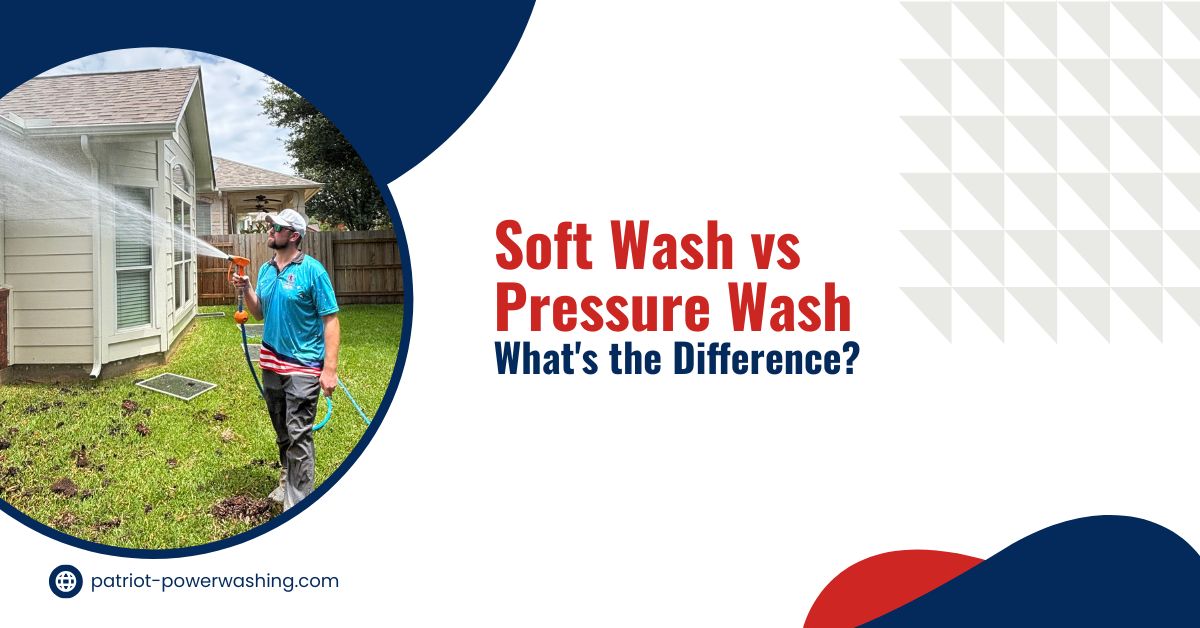
Ask ten homeowners around Central Texas what separates soft washing from pressure washing, and most will say it’s the same thing with two names. It isn’t. Choosing the wrong method is one of the fastest ways to crack siding or strip a roof, since using the force meant for pool deck pressure washing on delicate shingles does real damage. That’s why the difference matters before anyone points a wand at your house.
What's the Real Difference Between Soft Washing and Pressure Washing?
The difference comes down to pressure and chemistry. Pressure washing relies on force, blasting water at roughly 1,300 to 3,000 PSI to strip grime off tough surfaces. Soft washing flips the approach, using low pressure, often between 300 to 700 PSI, paired with cleaning solutions that kill mold, mildew, and algae at the root instead of just knocking them loose.
That distinction matters more than it sounds. High pressure cleans by brute force; soft washing lets the solution do the work so the surface never takes a beating.
When Should You Use Pressure Washing?
Pressure washing is the right call for hard surfaces that can take the force. Around a typical Texas home, that usually means:
- Concrete driveways, sidewalks, and walkways
- Brick and stone
- Patios and paver surfaces
- Pool decks and unsealed concrete around the pool
If you’ve been putting off some driveway and sidewalk cleaning, this is where pressure washing shines, cutting through oil stains, tire marks, and embedded dirt a garden hose will never touch. The same goes for pool deck pressure washing, where summer sunscreen, algae, and foot traffic leave concrete slick by August.
When Is Soft Washing the Safer Choice?
Soft washing is built for surfaces high pressure would destroy. In our climate, the most common example is your roof. Central Texas humidity and shade breed black algae streaks on shingles, and a pressure washer will tear off the protective granules and shorten the roof’s life.
That’s exactly why soft wash roof cleaning exists. The low-pressure approach lifts algae and mildew without harming a single shingle, and because it treats the growth at its source, the results last far longer. Soft washing is also the go-to for:
- Vinyl, stucco, and fiber cement siding
- Painted wood and trim
- Window screens and delicate fixtures
- Anything porous or already showing wear
Which Method Does Your Texas Home Actually Need?
Here’s the answer most homeowners don’t expect: usually both. A single visit often calls for pressure washing the concrete and soft washing everything above it. A simple way to think about it:
- Hard and flat? Pressure wash it. Driveways, sidewalks, and pool decks can handle the force.
- Delicate, painted, or overhead? Soft wash it. Roofs, siding, and trim need the gentle treatment.
- Not sure? Default to soft washing. It’s lower-risk, and a pro can step up the pressure only where it’s safe.
This is why hiring someone who knows both methods pays off. A professional reads the surface and matches the pressure and solution to the material. DIY can work, but without that experience it is easier to get the pressure wrong, and siding, roofs, and window seals are costly things to get wrong.
Why Does This Matter So Much in Central Texas?
Our weather is hard on the outside. Long, hot summers bake stains into concrete, storms splatter mud and pollen, and humidity feeds algae on shaded roofs and walls. Most homes here need a mix of methods, and the wrong one accelerates the wear you’re trying to prevent. Get it right, high pressure for driveway and sidewalk cleaning, a gentle touch for roofs, and the payoff is real: cleaner surfaces, a healthier roof, and curb appeal that holds up through the season.
Choosing the right cleaning method is important, but so is knowing the best time to power wash your house to keep your exterior cleaner for longer and prevent stubborn buildup. If you’d rather not figure out which method is right for each surface, the team at Patriot Power Washing is happy to assess your property and handle the job safely.
Frequently Asked Questions
Is soft washing strong enough to actually get things clean?
Yes. It cleans through chemistry rather than force, breaking down mold, mildew, and algae at the root. That often means the surface stays cleaner longer than it would after pressure washing alone.
Can I pressure wash my own roof to save money?
It’s strongly discouraged. High pressure strips granules off shingles and can force water underneath, leading to leaks. Roofs should always get soft wash roof cleaning instead.
Will pressure washing damage my concrete driveway?
Concrete is built to handle it, so driveway and sidewalk cleaning with a pressure washer is safe when done correctly. The risk comes from the wrong tip or holding the nozzle too close, which can etch the surface.
How often should I have my home washed in Texas?
Most homes benefit from a yearly wash, though shaded roofs and pool decks that collect algae may need it more often. Regular cleaning also keeps buildup from becoming a costlier job later.
Is soft washing safe for my plants and pets?
Professional soft washing uses solutions at controlled concentrations, and a good crew rinses and protects surrounding landscaping. Let your technician know about sensitive plants or pets ahead of time.
Our Latest posts
Get In Touch
Contact Info
- 737-403-2007
- patriotpowerwashctx@gmail.com
- 3817 Bent Brook Drive, Round Rock TX 78664