
Does Power Washing Damage Paint, Wood, or Concrete?
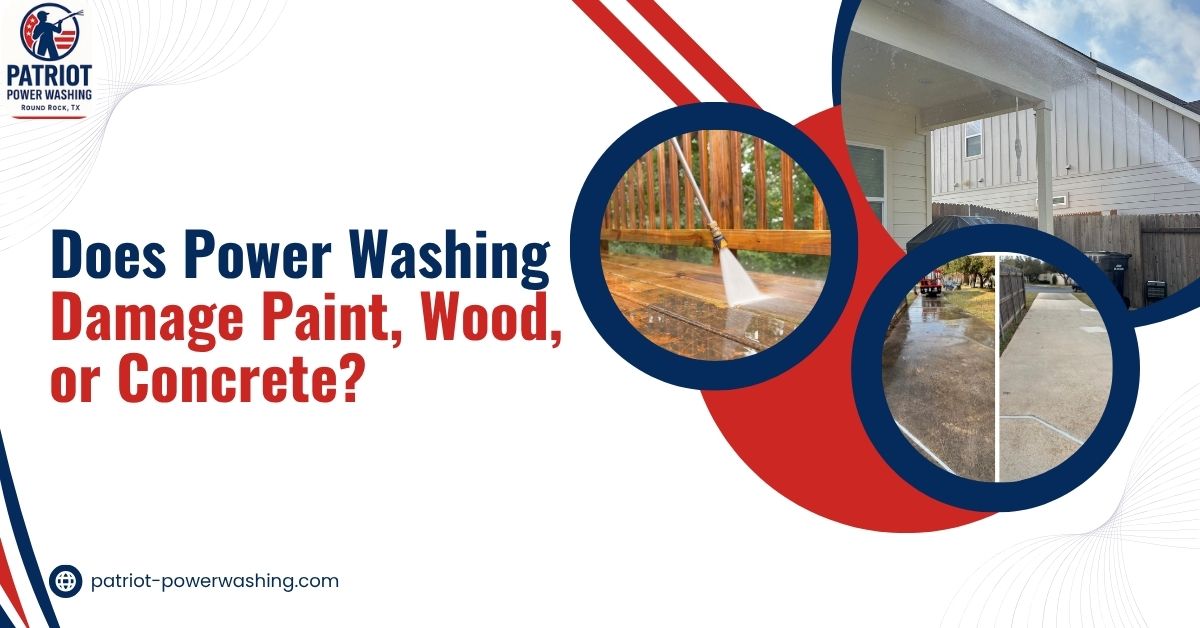
It’s a fair question, and worth asking before you point a high-powered wand at your house. Power washing is one of the fastest ways to refresh a tired exterior, but the same force that strips grime can just as easily strip paint or gouge soft wood if it’s aimed wrong. The surface itself isn’t usually the problem. The setup is. Let’s look at what happens to each material.
Can Power Washing Damage Paint?
Yes, it can, and this is where a lot of DIY jobs go sideways. A strong stream of water can lift paint right off siding, trim, or a deck, especially if the paint is already aging or loosely bonded.
That doesn’t mean water and paint can’t mix. It means pressure and distance matter. Held too close or set too high, a washer will peel a finish you meant to keep. That same power is useful when you’re prepping to repaint and want loose paint gone, so it comes down to intent and control:
- Keeping the paint? Lower pressure, wider nozzle, more distance.
- Stripping old paint before repainting? Higher pressure does the work for you.
The trouble starts when someone uses stripping-level force on a finish they wanted to protect.
Does Power Washing Damage Wood?
Wood punishes mistakes the most. Push too hard and you’ll raise the grain, leave visible scratches, or splinter the boards, turning a smooth deck into a fuzzy, rough mess.
Softer woods like cedar and pine are especially delicate and need a gentle touch. Even sturdy decks can be scarred by a narrow nozzle held too close. The fix isn’t skipping the wash, it’s dialing the pressure down, using a wider spray, and keeping the wand moving instead of lingering in one spot.
For a lot of wood, painted siding, and other soft surfaces, this is where the pressure washing vs soft washing distinction earns its keep. Soft washing uses low pressure and cleaning solutions to lift dirt, mold, and mildew without the force that damages delicate materials.
Is Concrete Tough Enough to Handle Power Washing?
Concrete is the champ here. It’s hard and built to take real pressure, which is why driveways, sidewalks, and patios are the classic power washing jobs.
Still, “tough” doesn’t mean “indestructible.” Too much force, a narrow tip, or holding the wand too close can etch the surface, leave streaks, or wear down sealed and decorative finishes. Older or stamped concrete deserves extra care. Done right, though, concrete cleans up beautifully and handles stains a garden hose never will.
A few things that keep concrete looking sharp:
- Keep the nozzle a steady distance from the surface
- Move in consistent passes rather than hovering in one place
- Go easier on colored, stamped, or sealed concrete
- Use higher pressure only where needed, like oil stains or tire marks
This is the sweet spot for a good driveway cleaning company, they lift stubborn grime without leaving wand marks behind. The same goes for sidewalk pressure washing, where even controlled passes keep the finish from turning patchy.
What Actually Causes Power Washing Damage?
Notice the pattern across all three. The material almost never fails on its own. The damage comes from a handful of avoidable mistakes:
- Too much pressure for the surface at hand
- The wrong nozzle, especially narrow or zero-degree tips
- Holding the wand too close, which concentrates force in one spot
- Poor technique, like lingering, bad angles, or uneven passes
Rental machines make this easier to get wrong, since many pack far more power than a home surface needs. That’s the real risk: not the cleaning, but the guesswork.
This is why hiring local pressure washing services often pays off. A professional reads the surface first, matches the pressure and method to the material, and switches to soft washing where force would do harm. You’re paying for judgment as much as equipment, and on siding, decks, and aged concrete, that judgment protects your property.
Frequently Asked Questions
Will power washing strip the paint off my house?
It can if the pressure is too high or the nozzle too close, particularly on older paint. At the right settings and distance, you can clean painted surfaces without stripping them.
Is it safe to pressure wash a wood deck?
Yes, with care. Use lower pressure, a wide nozzle, and keep the wand moving. Softer woods like cedar and pine need an especially gentle approach to avoid splintering or fuzzing the grain.
Can concrete really be damaged by pressure washing?
It’s the most durable of the three, but too much force or the wrong tip can still etch it or wear down sealed and decorative finishes. Technique matters even on tough surfaces.
How do I know whether to pressure wash or soft wash?
As a rule, hard surfaces like concrete handle pressure well, while delicate ones like wood, painted siding, and roofs suit soft washing. When in doubt, the gentler method is the safer starting point.
Not sure your surfaces can take the pressure? Patriot Power Washing is a veteran-owned team serving Austin, Round Rock, Cedar Park, Georgetown, and the surrounding Central Texas area. We match the right method to every surface, so your exterior gets clean without the damage.
Our Latest posts
Get In Touch
Contact Info
- 737-403-2007
- patriotpowerwashctx@gmail.com
- 3817 Bent Brook Drive, Round Rock TX 78664